
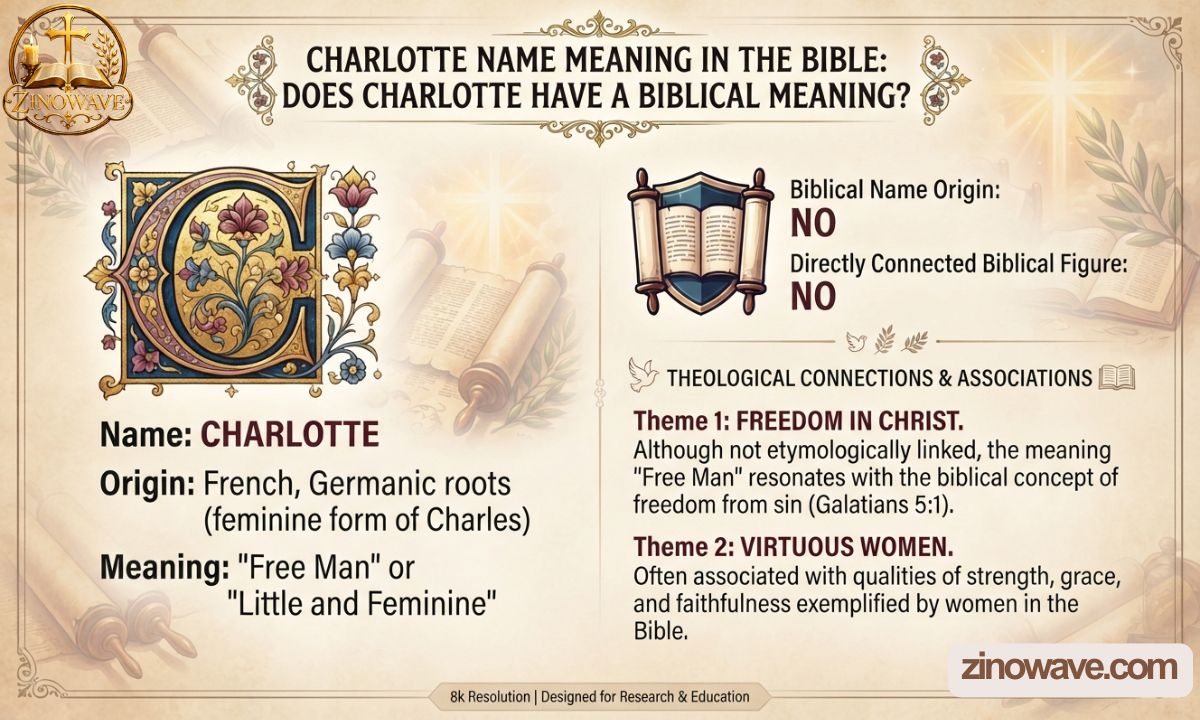
The name Charlotte carries an elegant history, but its meaning goes deeper than its royal and classic image. Rooted in the Germanic name Karl and shaped through French, Charlotte is commonly associated with freedom, strength, and femininity. But does this beautiful name actually appear in the Bible, and is there a deeper spiritual meaning behind it?
Although Charlotte is not found in Scripture, its meaning connects naturally with important biblical themes such as freedom in Christ, courage, grace, humility, and inner strength. In this guide, we’ll explore the Charlotte name meaning in the Bible, its true origin, spiritual significance, personality traits, and the biblical ideas that make this timeless name meaningful for Christian families.
The Origin and Meaning of Charlotte
Charlotte is the feminine form of Charles, which comes from the Old German name Karl, meaning “free man” or “strong.” Over centuries, as the name passed through French usage, it also picked up associations with the word “petite,” meaning small or little, giving Charlotte a dual meaning of strength paired with gentleness.
Put simply, Charlotte carries the sense of a “free woman,” someone marked by both inner strength and quiet dignity.
Related Name Variations:
- Charlize
- Carla
- Karla
- Charlène
- Lottie
- Carlotta
Biblical Themes Related to Charlotte

Leadership and Strength
The strength embedded in Charlotte’s meaning echoes Ephesians 6:10, which encourages believers to “be strong in the Lord and in his mighty power.” This theme of strength isn’t about physical power alone, but about steady, faith-rooted confidence.
Freedom in Christ
Perhaps the most commonly cited biblical connection to Charlotte is freedom. Galatians 5:1 declares, “It is for freedom that Christ has set us free.” Since Charlotte’s root name Charles means “free man,” many believers see this as a beautiful parallel to spiritual liberation through faith.
Service and Humility
Despite its association with strength, Charlotte also carries an undertone of humility through its French root “petite.” This mirrors Mark 10:45, which describes Jesus coming “not to be served but to serve.” True strength, in a biblical sense, often includes a willingness to serve others.
Grace and Dignity
Charlotte’s overall tone, elegant yet approachable, reflects the biblical idea of grace: strength that doesn’t need to dominate, and dignity that doesn’t require attention to be meaningful.
Faith and Character Development
Names like Charlotte, while not scriptural, can still serve as daily reminders of character growth. Many parents view the act of naming as an opportunity to speak intention and faith over their child’s life, even when the name itself isn’t found in the Bible.
Is Charlotte a Christian name
Charlotte isn’t a biblical name in the traditional sense, since it doesn’t appear in Scripture. However, it’s widely considered a Christian-friendly name because its meaning aligns so closely with core Christian values like freedom, strength, and grace.
Many Christian families choose Charlotte specifically because of these symbolic connections, even without a direct scriptural reference.
What does the name Charlotte mean personality
- Confident without being overbearing
- Naturally graceful in how they carry themselves
- Independent and self-assured
- Warm and approachable in relationships
- Resilient during difficult seasons
The Timeless Beauty of Charlotte
Charlotte has remained a beloved name for centuries, and its popularity shows no sign of fading. Inspired by historical figures like Queen Charlotte, wife of King George III,
and more recently Princess Charlotte of Cambridge, the name carries a royal elegance that continues to resonate with parents today. Its steady rise in modern naming charts reflects both its classic sound and its meaningful symbolism.
Meaning of Charlotte in greek
Charlotte does not have a direct Greek origin. Its roots are Germanic and French, tracing back through Charles and Karl rather than any Greek word or name. While some names carry Greek linguistic history, Charlotte’s development moved through entirely different language traditions.
Charlotte meaning in French
In French, Charlotte carries the added meaning of “petite,” or “little,” which softened the more masculine “free man” meaning inherited from Charles. This is where Charlotte’s dual symbolism comes from, strength on one side, gentleness on the other, making it a name that balances both qualities beautifully.
What does the name Charlotte mean in Hebrew
Charlotte has no direct Hebrew translation, since its origins are entirely Germanic and French rather than Hebrew. That said, some believers connect its themes of freedom and grace to similar concepts found in Hebrew names, even though there’s no linguistic link between the words themselves.
Final words
So, does Charlotte have a meaning in the Bible? Not directly, Scripture never mentions the name itself. But its symbolism runs deep, rooted in freedom, strength, humility, and grace, values that sit at the very heart of Christian faith.
Whether you’re naming a daughter or simply curious about your own name’s story, Charlotte offers a beautiful reminder that identity and meaning can be found in far more than a single verse.
Frequently Asked Questions
Is Charlotte a biblical name?
No, Charlotte does not appear in the Bible. It comes from Germanic and French roots, meaning “free man” or “petite.”
What is the spiritual meaning of Charlotte?
Charlotte is spiritually connected to freedom in Christ, strength, and grace, themes reflected throughout Scripture.
Is Charlotte considered a Christian name?
While not biblical, Charlotte is widely seen as Christian-friendly due to its meaningful ties to core Christian values.
What does Charlotte mean in French?
In French, Charlotte carries the added meaning of “petite,” or “little,” softening its original meaning of “free man.”
Does Charlotte have a Hebrew meaning?
No, Charlotte has no Hebrew origin, though its themes of freedom and grace resonate with similar biblical concepts.

Samuel is a Bible content writer with 5 years of experience in researching Bible verses, prayers, blessings, and biblical name meanings. He shares meaningful insights to help readers understand Scripture better.