Ryan is one of the most popular names in English-speaking countries, and many people search for its connection to Scripture before choosing it for a child or exploring their own identity.Ryan doesn’t appear word-for-word in the Bible. But its meaning, roots, and symbolism connect closely to themes the Bible celebrates again and again, especially leadership, humility, and royal identity.
This guide walks through everything, from pronunciation to Arabic and Hebrew connections, so you leave with a complete picture.
Is Ryan in the Bible?
No, Ryan does not appear directly in either the Old Testament or the New Testament. It isn’t a Hebrew, Aramaic, or Greek name from Scripture.
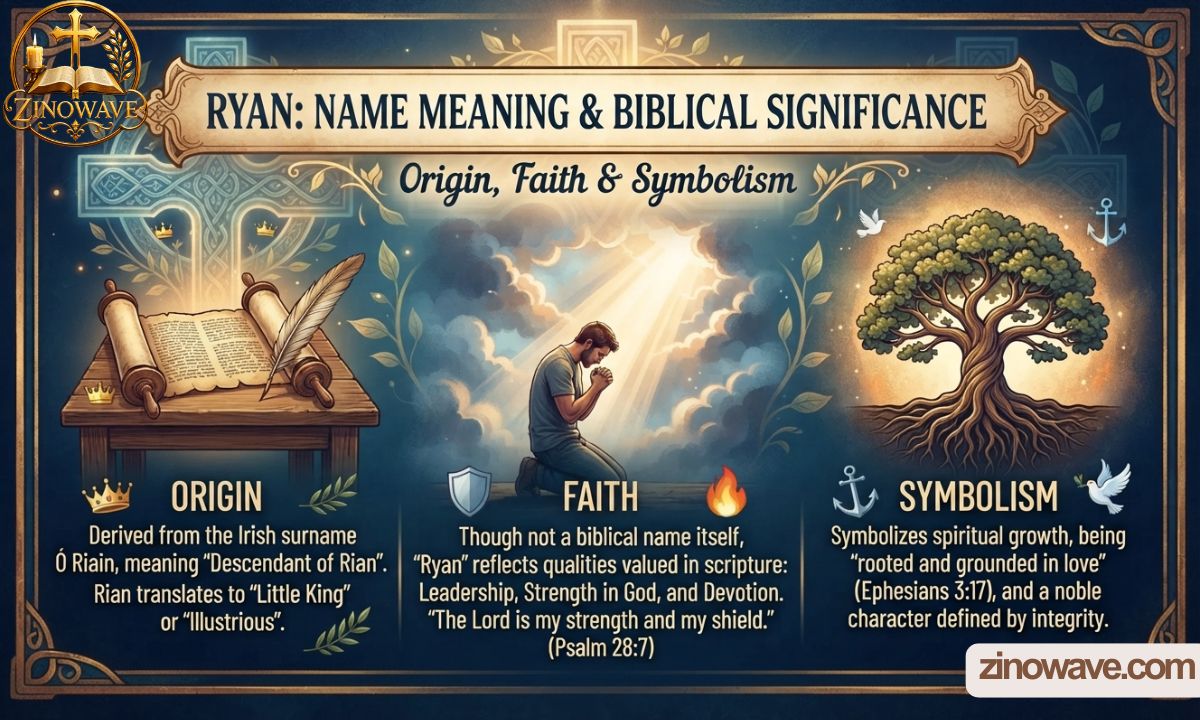
Ryan is Irish in origin, coming from the Gaelic surname Ó Riain, which developed centuries after the biblical texts were written. So while you won’t find “Ryan” printed in any chapter or verse, that doesn’t make the name spiritually empty.
- Its root meaning, “little king,” mirrors biblical ideas of God-given leadership
- Many Christian parents choose non-biblical names for their spiritual sound and symbolism
- What matters most, many believers argue, isn’t whether a name is in Scripture, but the character and faith of the person who carries it
Ryan Name Pronunciation
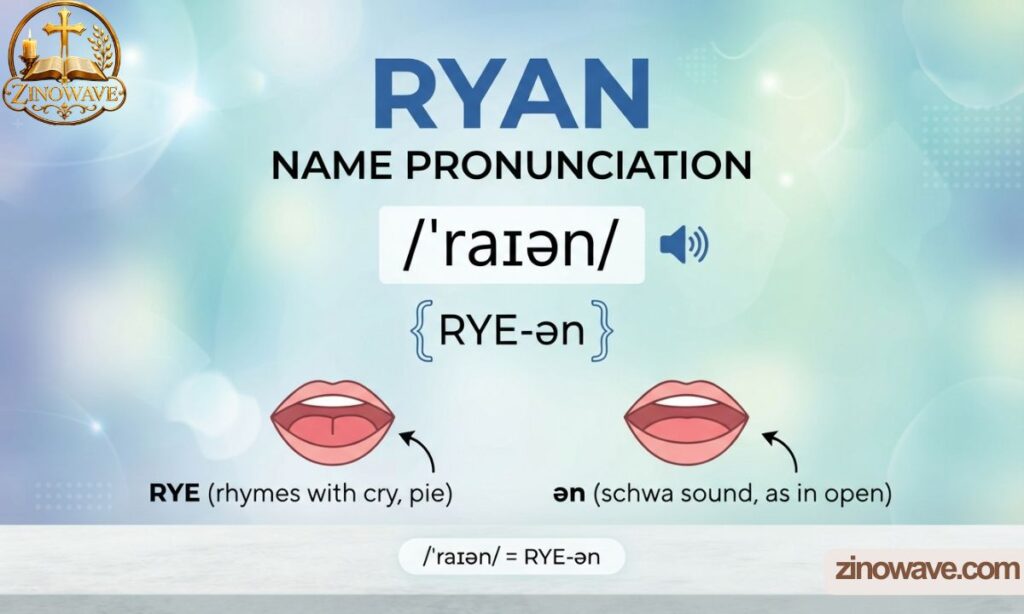
Ryan is simple to say and stays consistent across most English-speaking regions.
- Pronounced: RY-an
- Two syllables, with the stress on the first syllable
- The first syllable rhymes with words like “sky” or “high”
- The name flows smoothly and rarely gets mispronounced, which is part of why it has remained popular for decades
Famous Ryans in History and Scripture
While Ryan doesn’t come from the Bible, real people carrying the name have shaped culture, leadership, and public life:
- Actors, athletes, and public figures have carried the name into mainstream recognition for decades
- Ryan ranked among the top male baby names in the United States for roughly three decades between the mid-1970s and mid-2000s
- Educators, clergy members, and community leaders named Ryan have quietly lived out the “little king” meaning through service and leadership
- Though no biblical figure is named Ryan, some early Christian writings and hagiographies reference individuals bearing variations of the name within church history
The name’s popularity across sports, entertainment, and everyday leadership roles shows how a modern name can still reflect timeless values.
The Cultural and Historical Significance of the Name Ryan
Understanding where Ryan comes from helps explain why it carries such a strong sense of identity today.
- Irish Gaelic roots: Ryan comes from Ó Riain, an anglicized form meaning “descendant of Rían”
- Root word “rí”: In Old Irish, rí simply means “king,” which is why Ryan is so often translated as “little king” or “illustrious”
- Surname to first name: Ryan started as a family surname before becoming a widely used given name in English-speaking countries during the 20th century
- Global spread: Today, Ryan is used by families across many cultures and faith backgrounds, far beyond its original Irish roots
This journey, from ancient surname to global first name, is part of what makes Ryan feel both timeless and modern at once.
Biblical Symbolism: What “Ryan” Might Represent
Even without a direct biblical mention, “little king” carries rich symbolic weight when viewed through a Christian lens.
- Royal identity in Christ: Scripture describes believers as part of a royal priesthood, which resonates naturally with a name meaning “king” (see 1 Peter 2:9)
- Servant leadership: Jesus taught that true greatness comes through serving others, a theme that reframes “little king” as humble leadership rather than pride (see Matthew 20:26)
- God-appointed leaders: Biblical figures like David rose from humble beginnings, shepherding sheep before leading a nation, showing that God often values character over status (see 1 Samuel 16:7)
- Guided strength: Verses about courage and trust in God’s direction (such as Joshua 1:9 and Proverbs 3:5-6) align with the quiet strength many associate with the Ryan name
Together, these themes suggest that if a name is going to symbolize kingship, the Bible’s version of a king is one who leads by humility, not dominance.
Nicknames for Ryan
Nicknames make a name feel personal and add warmth in everyday conversation. Ryan is short already, but that hasn’t stopped families and friends from creating playful variations.
30 Nicknames for Ryan
| Nickname | Style |
| Ry | Simple and casual |
| Ry-Guy | Friendly and playful |
| RyRy | Affectionate, childlike |
| Ryno | Bold and energetic |
| RyBread | Lighthearted, fun |
| Ryder | Strong, adventurous |
| Rye | Short and sharp |
| Ryan Bear | Warm, affectionate |
| Ry-Man | Casual, buddy-style |
| Little King | Meaning-based nickname |
| Rian | Traditional spelling variant |
| Ryen | Modern spelling twist |
| Ryzo | Unique, invented style |
| RJ | Initials-based |
| Ryski | Playful, informal |
| Ry Ry Bear | Extra affectionate |
| Captain Ry | Leadership-themed |
| King Ry | Meaning-inspired |
| Ryzer | Energetic nickname |
| Ry-Bear | Sweet, family-style |
| Ryland | Extended name form |
| Ry-Dawg | Fun, friend-group style |
| Ryeman | Casual variation |
| Ry-Cat | Playful pet name |
| Ryeguy | Alternate spelling of Ry-Guy |
| Small King | Meaning-based, gentle |
| Ry-Star | Encouraging nickname |
| Ryboo | Sweet, childlike |
| Ry-Champ | Achievement-themed |
| Ryzee | Modern, invented style |
Ryan Spiritual Life
For Christian families, the spiritual meaning of Ryan often becomes a guiding theme rather than a rigid rule.
- Leadership through humility: The “little king” meaning encourages leading others by example, not by force
- A life of prayer: Many parents who choose the name Ryan pray that their child grows into responsible, faith-centered leadership
- Purpose over pride: Biblical kingship always circles back to serving God’s purposes, not personal glory
- Everyday application: Regular prayer, Scripture reading, and community involvement are often described as ways to “live out” the spiritual meaning behind the name
Whether or not someone believes a name shapes a person’s path, many find comfort in framing Ryan’s meaning as an invitation toward humble strength.
Ryan Arabic Name Meaning
Interestingly, Ryan carries an entirely different, and equally meaningful, interpretation in Arabic and Islamic tradition.
- In Arabic, Ryan (ريان / Rayyan) means “well-watered,” “lush,” or “one who is full and satisfied”
- It’s connected to abundance, freshness, and vitality rather than kingship
- In Islamic tradition, Al-Rayyan is described as one of the gates of Paradise, reserved for those who fast
- This gives the name a spiritually uplifting connotation in Muslim communities, tied to purity, reward, and blessing
So while the Irish meaning centers on royalty, the Arabic meaning centers on abundance and spiritual satisfaction, two very different but equally positive associations.
Ryan Name Meaning Hebrew
Ryan is not a traditional Hebrew name, and it does not appear in Hebrew scripture. Still, some interpretive connections have emerged over time.
- Some link Ryan symbolically to the Hebrew word re’a (רֵעַ), meaning “friend,” suggesting loyalty and companionship
- Others connect it to re’iyah (ראיה), meaning “vision” or “clarity,” suggesting insight and understanding
- The “little king” meaning is sometimes tied loosely to the Hebrew word melech, meaning “king,” even though this is not a direct linguistic root
- These connections are symbolic and interpretive rather than historically accurate translations
Hebrew-speaking families who choose Ryan today often do so for its sound and modern appeal, then layer on these symbolic meanings afterward.
Conclusion
Ryan may not appear anywhere in Scripture, but its story is far from empty of meaning. Rooted in Irish Gaelic tradition as “little king,” the name naturally echoes biblical themes of humble leadership, God-appointed purpose, and royal identity through faith. Its Arabic meaning adds abundance and spiritual satisfaction, while its loose Hebrew associations bring in ideas of friendship and vision.
For families and individuals who carry this name, the takeaway is simple: a name doesn’t need to be written in ancient scripture to carry spiritual significance. What matters most is the character, faith, and life someone builds around it.
Frequently Asked Questions
Is Ryan mentioned in the Bible?
No, Ryan is not found in the Old or New Testament. It is an Irish Gaelic name that developed long after Scripture was written.
What does the name Ryan mean?
Ryan means “little king” or “illustrious,” coming from the Old Irish word “rí,” meaning king.
How do you pronounce Ryan?
Ryan is pronounced “RY-an,” with two syllables and emphasis on the first.
What does Ryan mean in Arabic?
In Arabic, Ryan (Rayyan) means “well-watered” or “lush,” and is linked to one of the gates of Paradise in Islamic tradition.
Does Ryan have a Hebrew meaning?
Ryan has no direct Hebrew origin, but it is sometimes symbolically linked to words meaning “friend” or “vision.”
Is Ryan a good name for a Christian child?
Yes, many Christian families choose Ryan for its meaning of “little king,” which aligns with biblical themes of humble leadership and royal identity in Christ.

Samuel is a Bible content writer with 5 years of experience in researching Bible verses, prayers, blessings, and biblical name meanings. He shares meaningful insights to help readers understand Scripture better.