

Tristan is a name often associated with sorrow and medieval romance, but its meaning can carry a deeper message of strength and hope. Although Tristan is not found in the Bible, its themes connect with Scripture’s teachings about enduring hardship with faith.
For Christian parents, Tristan can symbolize the journey from sorrow to strength. The Bible reminds us that difficult seasons can produce perseverance, character, and hope, giving this name a meaningful spiritual perspective beyond its literal meaning.
What Does Tristan Actually Mean?
At its core, Tristan is widely translated as “sorrowful” or “full of grief,” derived primarily from the Latin word tristis.A secondary Celtic root, Drustan or Trystan, adds a different flavor entirely, suggesting tumult, boldness, or a warrior-like spirit rather than passive sadness.
Etymology and Historical Origins of Tristan
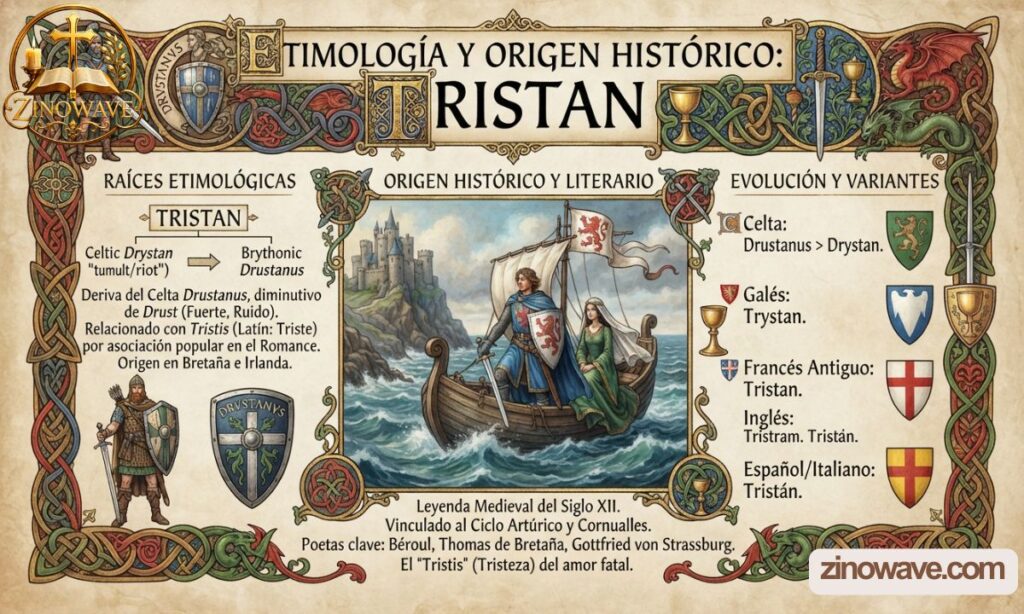
Most name historians trace Tristan’s roots to two separate cultural streams that eventually merged into one name.
- Latin root, tristis: meaning sad or sorrowful, spread through Roman culture and later absorbed into Christian naming traditions.
- Celtic root, Drustan or Drust: emerging from Pictish and Old Welsh language, associated with tumult or bold, warrior-like energy.
By the medieval period, these two threads combined into the Tristan we recognize today.
What About the Tristan and Isolde Legend?
Tristan’s popularity owes much to the medieval legend of Tristan and Isolde, a tragic tale of forbidden love, loyalty, and sacrifice that captivated Europe for centuries.
While the romance itself involved adultery and does not align with Christian values, many parents separate the literal folklore from the name’s deeper linguistic meaning when choosing it today.
Spiritual Significance of the Name Tristan
Spiritually, Tristan is often reframed not as a name of defeat, but as one of transformation. Scripture repeatedly shows sorrow serving as a passage toward growth rather than a permanent state, which is exactly how many Christian parents interpret this name.
- Romans 5:3-4 teaches that suffering produces perseverance, character, and hope.
- Matthew 5:4 promises that those who mourn will be comforted.
- Psalm 126:5 describes sowing in tears and reaping with joy.
Tristan in Biblical History and Tradition
No biblical figure carries the name Tristan, and it never appears in the Old or New Testament. Its origins in Latin and Celtic culture developed centuries after scripture was written, meaning any connection is thematic rather than direct.
The Origin of Tristan in Celtic and Christian Culture
Tristan emerged in Wales and Cornwall during the fifth century, a period when Celtic Britain was undergoing significant Christian transformation under early missionaries.
Though rooted in pre-Christian legend, the name was eventually embraced by medieval Christian communities, who reinterpreted its meaning of sorrow through a redemptive, faith-centered lens.
Tristan Isn’t Alone: Other Names That Aren’t in Scripture Either
Job: Suffering and Faith
Job endured extraordinary loss yet remained faithful, a story often paired with Tristan’s meaning of sorrow met with endurance.
Jeremiah: Prophet of Sorrow
Known as the weeping prophet, Jeremiah reflects the same emotional depth associated with Tristan’s Latin roots.
Joseph: From Pit to Palace
Joseph’s journey from betrayal and imprisonment to restoration mirrors the transformation many associate with Tristan’s meaning.
Comparison Table
| Name | Biblical Status | Core Theme |
| Tristan | Not in scripture | Sorrow transformed into strength |
| Job | In scripture | Suffering met with faith |
| Jeremiah | In scripture | Sorrow expressed through prophecy |
| Joseph | In scripture | Hardship leading to restoration |
Thomas: Doubt to Belief
Thomas moved from doubt to declared faith after encountering the risen Christ, another example of transformation scripture consistently celebrates.
Biblical Alternatives to Tristan
- Caleb, meaning faithful and wholehearted
- Nathan, meaning gift from God
- Josiah, meaning God supports
- Elijah, meaning my God is Yahweh
Why Parents Choose Tristan: A Biblical Perspective
Many Christian parents choose Tristan specifically because its meaning acknowledges life’s hardships honestly, while still pointing toward hope.
Rather than promising an easy life, the name reflects a faith that expects trials but trusts God’s presence through them.
Tristan Name Meaning in Hebrew and Greek
Tristan has no Hebrew or Greek origin. It developed entirely through Latin and Celtic language, long after both biblical languages had already shaped scripture’s original text.
Hebrew Concepts of Sorrow and Strength
Hebrew spirituality often treats sorrow as sacred rather than shameful, closely tied to words describing refinement through trials and faithful endurance under hardship.
Greek Spiritual Transformation Terms
In Greek New Testament thought, transformation through suffering appears frequently, particularly in Paul’s writings describing perseverance producing proven character.
Linguistic Comparison Table
| Language | Root Meaning | Spiritual Theme |
| Latin | Sad, sorrowful | Redemptive suffering |
| Celtic | Tumult, bold | Warrior-like resilience |
| Hebrew (thematic) | Refinement through trial | Sacred sorrow |
| Greek (thematic) | Transformation | Perseverance to hope |
The Cultural and Religious Impact of the Name Tristan
Popularity Trends in Christian Communities
Tristan has grown steadily within Christian families, particularly those drawn to names with emotional depth rather than a lighthearted meaning.
Cross-Denominational Acceptance
The name is widely accepted across Catholic, Protestant, and nondenominational Christian communities, since its meaning is interpreted through shared values rather than doctrine.
Celebrity Christian Usage
Several public figures within faith-based entertainment and media circles have helped normalize Tristan as a modern Christian name choice.
Academic Perspectives
Name scholars generally agree Tristan’s dual Latin-Celtic origin makes it linguistically rich, even without biblical roots, adding to its appeal among parents who value historical depth.
Social Perceptions and Faith Communities
Within many church communities, Tristan is seen less as a name meaning sadness and more as a quiet declaration that faith holds steady through life’s hardest seasons.
What the Bible Teaches About Names and Identity
Scripture consistently shows that names carried destiny and character, from Jacob’s wrestling with God to Jabez’s prayer to be blessed despite his painful name.
This tradition supports the idea that a name’s meaning is only the beginning of someone’s story, not the end.
Biblical Characters Who Reflect Tristan’s Meaning
- David, who poured his sorrow into the Psalms while remaining devoted to God.
- Jesus, who wept over human suffering while offering redemption.
- Hannah, whose deep grief turned into answered prayer and praise.
Final Words
Tristan may mean “sorrowful,” but its story doesn’t end there. Rooted in both Latin and Celtic tradition, the name carries a quiet invitation to trust that sorrow is never the final chapter.
For Christian families, Tristan becomes less about its literal translation and more about the deeper biblical pattern it echoes, pain transformed into purpose through faith.
Frequently Asked Questions
Is Tristan a name in the Bible?
No, Tristan does not appear in scripture, though its meaning connects thematically to biblical stories of sorrow and redemption.
What does the name Tristan mean spiritually?
Spiritually, Tristan represents sorrow transformed into strength, reflecting the biblical pattern of hardship leading to growth and hope.
Is Tristan a good name for a Christian child?
Yes, many Christian families choose Tristan for its emotional depth and its connection to themes of faith through trials.
Does Tristan have a Hebrew meaning?
No, Tristan has no Hebrew origin, though its themes align with Hebrew concepts of sacred sorrow and refinement through hardship.

Samuel is a Bible content writer with 5 years of experience in researching Bible verses, prayers, blessings, and biblical name meanings. He shares meaningful insights to help readers understand Scripture better.