
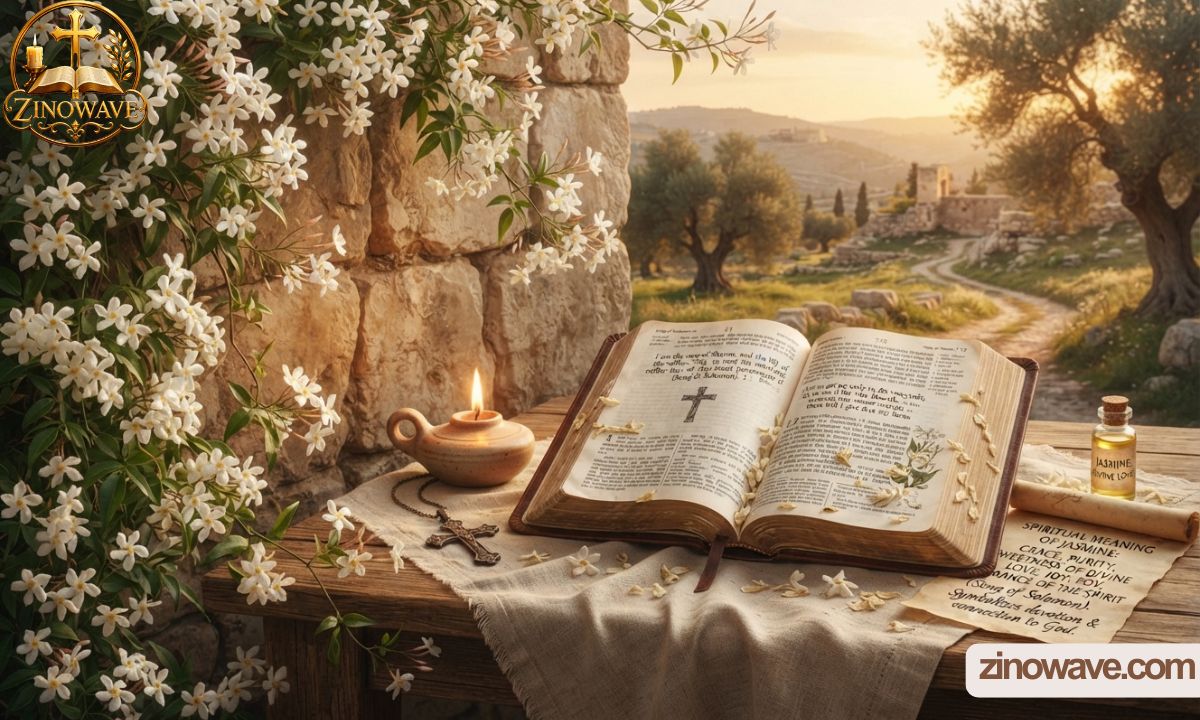
Have you come across jasmine in a dream, your garden, or even during a quiet moment of prayer and wondered whether it has a deeper biblical meaning. Although jasmine is not mentioned by name in the Bible, its pure white blossoms, sweet fragrance, and gentle beauty closely reflect several themes found throughout Scripture. For many Christians, the flower serves as a meaningful reminder of purity, faithful worship, hope, and God’s quiet presence during every season of life.
Rather than pointing to a hidden prophecy or supernatural sign, jasmine’s symbolism is best understood through biblical principles about flowers, fragrance, and spiritual growth. This guide explores the biblical meaning of jasmine, its spiritual symbolism, possible dream interpretations, and the practical faith lessons believers can draw from its beauty and fragrance.
Biblical Meaning of Jasmine
Jasmine is not mentioned by name in the Bible, but its characteristics echo several recurring biblical symbols. Scripture frequently uses flowers, fragrance, and gardens to reveal spiritual truth, and jasmine fits naturally into that pattern.
Key Biblical Associations of Jasmine
- Purity: jasmine’s white petals reflect the biblical connection between the color white and righteousness, as seen in Isaiah 1:18
- Fragrance as worship: its sweet scent mirrors 2 Corinthians 2:15, which describes believers as “the aroma of Christ”
- Hope in hard seasons: jasmine often blooms in difficult conditions, echoing Isaiah 35:1’s promise of the desert blossoming
- Divine presence: its gentle, quiet nature reflects how God often speaks softly, as in 1 Kings 19:12
The Name Itself Is a Clue
The word jasmine comes from the Persian term “yasmin,” meaning “gift from God.” This origin adds another layer to its spiritual symbolism, suggesting that jasmine represents grace freely given rather than something earned.
Fragrance as Prayer
Throughout Scripture, fragrance is closely tied to worship and prayer. In the Old Testament, incense burned in the Tabernacle symbolized prayers rising to God (Exodus 30:34-35).
Jasmine’s scent carries a similar picture, reminding believers that their prayers and daily actions can rise before God like a pleasing offering.
Spiritual Significance and Symbolism

Beyond its biblical associations, jasmine holds broader spiritual symbolism that many Christians find meaningful in their personal faith journey.
Core Spiritual Symbols of Jasmine
| Symbol | Spiritual Meaning |
| White petals | Purity, holiness, a clean heart |
| Sweet fragrance | Worship, prayer, a life pleasing to God |
| Night blooming | Hope and peace during dark seasons |
| Delicate structure | Gentle strength and quiet faith |
| Gradual blooming | Spiritual growth that takes time |
Jasmine Across Christian Tradition
In Catholic tradition, jasmine has often been associated with the Virgin Mary, symbolizing her purity and grace.
More broadly, Christian worship has long linked fragrant flowers with the idea of a life devoted to God, since a pleasing aroma was historically connected to acceptable offerings and worship.
Biblical Interpretations in Dreams or Real Life
Many people encounter jasmine not just in gardens but in dreams, and this often raises questions about what the flower might represent spiritually.
Dreaming of Jasmine, Spiritual Meaning
Dreaming of jasmine is commonly interpreted as a sign of:
- Spiritual renewal or a fresh season of faith
- God’s nearness during a time of uncertainty
- An invitation to pursue a purer, more devoted heart
- Encouragement that answered prayer or peace is close
The Jasmine Dream Interpretation in Christianity
Christian teaching encourages believers not to treat natural symbols like jasmine as objects of worship, but rather as gentle reminders that point back to God. If jasmine appears repeatedly in dreams or daily life, it’s often suggested to:
- Pray for discernment about what God may be highlighting
- Reflect honestly on your current spiritual state
- Consider whether God is calling you toward greater purity or trust
- Use the moment as an invitation to slow down and pray
Practical Lessons & Faith Insights
Jasmine’s symbolism isn’t just theoretical. It offers practical takeaways for everyday faith.
5 Faith Lessons from Jasmine
- Pursue purity of heart. Just as jasmine’s petals appear untainted, Proverbs 4:23 calls believers to guard their hearts above all else.
- Let your life be a fragrant offering. Like jasmine releasing its scent, your acts of love and worship can rise to God as described in 2 Corinthians 2:15.
- Trust God in dark seasons. Jasmine often blooms at night, a reminder that God remains present even in life’s hardest chapters.
- Embrace gradual growth. Spiritual maturity, like a blooming flower, often happens slowly and quietly rather than all at once.
- Rest in God’s quiet voice. Jasmine’s gentle fragrance reflects how God often speaks in stillness rather than through dramatic signs.
Jasmine as a Symbol of Spiritual Awakening
Just as a jasmine bud slowly opens into full bloom, many believers see the flower as a picture of spiritual awakening, a heart gradually opening to God’s presence, trust, and guidance over time.
What Does Seeing Jasmine Mean Spiritually?
Seeing jasmine unexpectedly, whether in a garden, a gift, or a passing moment, is often interpreted as a gentle nudge from God rather than a dramatic sign.
When You See Jasmine, It May Be God Saying:
- “Be still, and know that I am near.”
- “Your prayers and actions matter to Me.”
- “Keep growing, even if the process feels slow.”
- “I am with you, even in difficult seasons.”
Signs from God Through Jasmine: A Quick Reference
| Situation | Possible Spiritual Message |
| Jasmine in full bloom | Peace, divine presence, spiritual growth |
| Jasmine wilting or fading | A gentle call to return to prayer |
| Receiving jasmine as a gift | God’s blessing or encouragement to share kindness |
| Smelling jasmine unexpectedly | A reminder that God’s presence is close |
Conclusion
While jasmine isn’t named directly in the Bible, its purity, fragrance, and quiet beauty reflect themes found throughout Scripture, from holiness and worship to hope in difficult seasons. Whether you encounter jasmine in a dream, a garden, or a quiet moment of reflection,
it can serve as a gentle reminder to pause, pray, and stay close to God. Like the flower itself, spiritual growth often happens gradually, and jasmine encourages believers to trust that process while resting in God’s steady, gentle presence.
Frequently Asked Questions
Is jasmine mentioned in the Bible?
No, jasmine isn’t named directly in Scripture, but its symbolism aligns closely with biblical themes of purity, peace, and God’s presence.
What does dreaming of jasmine mean spiritually?
It often represents spiritual renewal, hope, or a gentle reminder that God is near during a season of change.
Can jasmine symbolize God’s protection?
Yes, its delicate yet resilient nature is often seen as a reflection of God’s care and faithfulness toward believers.
Does jasmine carry any spiritual warning?
At times, its fading blooms are interpreted as a gentle call to return to prayer and guard against spiritual complacency.
What does the name Jasmine mean biblically?
The name comes from the Persian word “yasmin,” meaning “gift from God,” reflecting divine grace and generosity.
How can I apply jasmine’s symbolism to my faith?
Let it serve as a reminder to pray, reflect, and recognize God’s presence in small, everyday moments.

Samuel is a Bible content writer with 5 years of experience in researching Bible verses, prayers, blessings, and biblical name meanings. He shares meaningful insights to help readers understand Scripture better.